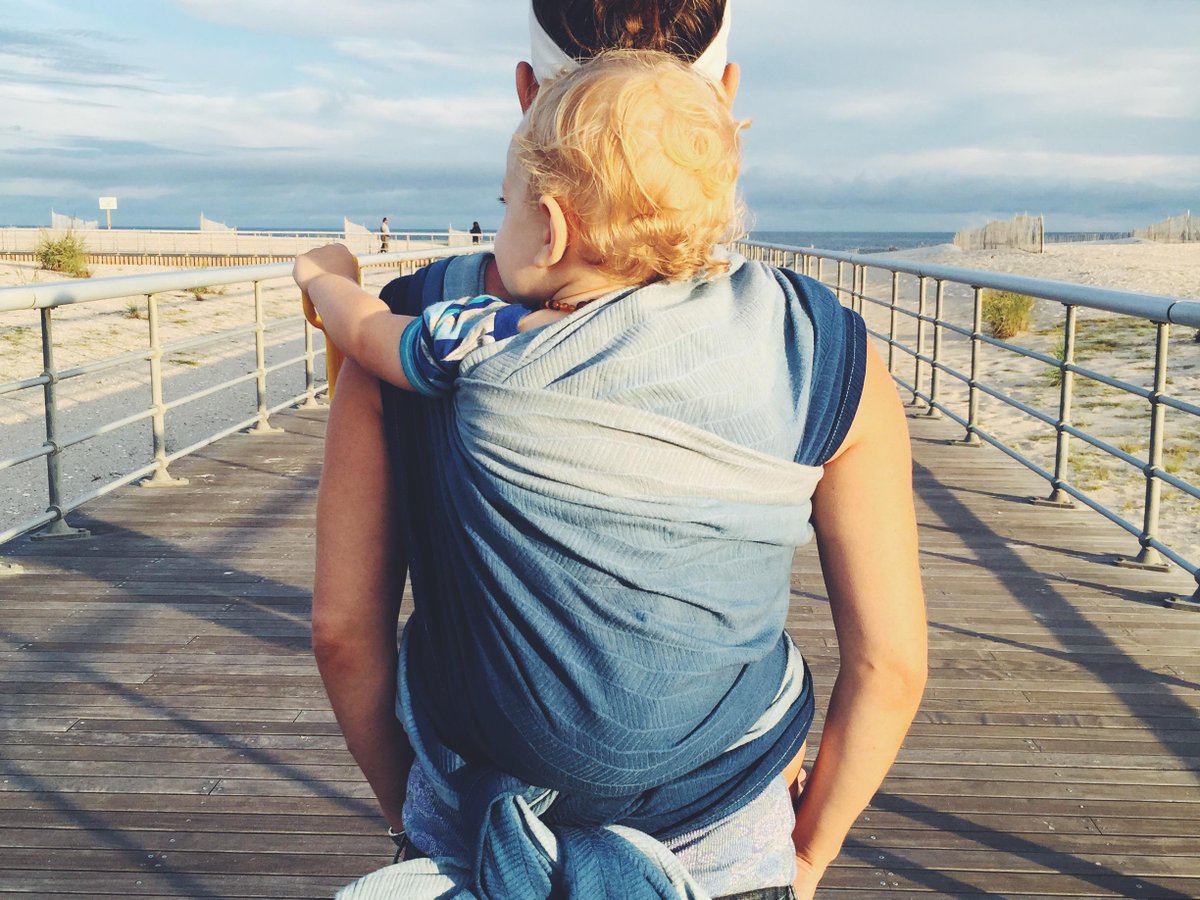
Photo Credit: Popsugar.com
If you were excited to see the words potty training and baby in the same sentence then you have come to the right place! I want to share with you my experience with Elimination Communication (EC) or Early potty training.
I first learned about EC
while I was pregnant with my daughter Madelyn. I was researching tips for my 1 ½ year old so he
would be out of diapers by the time his little sister was born. At this
time his older brother was still not fully potty trained at 3 ½ and I was
sick of smelly and expensive diapers!
So what is Elimination Communication?
"Elimination communication (EC) is a practice in which a caregiver uses timing, signals, cues, and intuition to address an infant's need to eliminate waste. Caregivers try to recognize and respond to babies' bodily needs and enable them to urinate and defecate in an appropriate place (e.g. a toilet). Caregivers may use diapers (nappies) as a back-up in case of "misses" some or all of the time, or not at all. EC emphasizes communication between the caregiver and child, helping them both become more attuned to the child's innate rhythms and control of urination and defecation. The term "elimination communication" was inspired by traditional practices of diaper-less baby care in less industrialized countries and hunter-gatherer cultures. Some practitioners of EC begin soon after birth, the optimum window being zero to four months in terms of helping the baby get in tune with their elimination needs, although it can be started with babies of any age. The practice can be done full time, part time, or just occasionally." ~ Wikepedia
Elimination communication sounds complicated right? I'm going to surprise you here by telling you that it is Absolutely not! Imagine you could avoid, or at least reduce the need and use of diapers, imagine being in-tune with your baby and creating a communication with this tiny person so that their need for elimination is heard and heeded. Imagine a toddler who has learned to hold his bladder and is willing to use the potty without the struggle of un-diaper training.
I have promised that this is not complicated but I will warn you, it is not an overnight process.
But lets face it, neither is potty training an older child!

Before Madelyn was born I bought a movie on Amazon called Potty Whispering: The Gentle Art of Infant Potty Training. It is a documentary about the use and benefits of infant potty training. In this movie I got to see what EC would be like in real life, not just on paper. I learned techniques for making the process easier and more successful. I also learned that their are wonderful benefits, not just to mother and child but also to the environment.
According to Ingrid Bauer, author of Diaper Free- Gentle Natural Hygiene by Ingrid Bauer "It’s possible—even practical—to raise your kids without diapers." Based on research, case studies, and her own experience she shows how you can:
- Save thousands of dollars
- Reduce landfill waste (single-use disposable diapers are responsible for one third of the non- biodegradable waste in landfills)
- Avoid diaper rash
- Use the “Four Tools for Diaper Freedom” to enhance your relationship with your baby and deepen communication.
If you are sitting there thinking that this could not possibly work, I want you to think about mothers in other countries who do not have access to disposable diapers.
In China they still use little crotchless pants that allow babies to squat pretty much anywhere when they are potty training and children who learn this way are potty trained at a much younger age than those who use diapers. In fact, according to Pediatrics Magazine Half of the babies around the world are potty trained by 12 months old"
 For the first 6 months I used a combination of cloth diapers and EC with Madelyn. During the day I left her without a diaper and used little leg warmers to keep her covered and comfy, at night and when I went out of the house I used cloth diapers. By watching her little body signals and listening to the noises she would make, I learned what her own bodily rhythm was. When she was really tiny, she always needed to eliminate while she was nursing so I would just hold the little potty bowl under her bum and make a "psssst pssst pssst" sound, this is the technique of cueing which consists of making a particular sound when the baby is eliminating. This helped her associate the noise with the action and when she got older I could make the sound and she would know it was time to go potty. When she got a little older I stopped using the cloth diapers and transitioned her to tiny underwear. At around 6 months Madelyn was able to sleep without wetting herself for almost the entire night and she was completely potty trained by two years old. The process of early potty training Madelyn was no more challenging than it was with my older boys. She suffered less diaper rashes and we never had the bed wetting that her brothers went through. I am a true believer that with a little patience and dedication EC can be fit into any lifestyle.
As with regular potty training it is important to remember that there
is no rush for baby to get it, they will learn and develop at their own
pace. EC is not about unrealistic goals, it is about working with your
baby to help them be aware of their body and develop healthy bathroom habits. Their
success will rely on your ability to read their cues, so remember to stay relaxed,
be patient, and have fun!
If you would like to learn more about Elimination Communication or Early potty training you can check out these resources:
- http://diaperfreebaby.org/
- http://ecsimplified.com/
- https://en.wikipedia.org/wiki/Elimination_communication